
Marriage Law in England and Wales – Could Change Be Coming?

If you’re currently planning a wedding in England or Wales, you may be surprised to learn that your legal marriage ceremony still has to follow rules that were first created in the 1800s.
While weddings themselves have evolved beautifully over the years — becoming more personal, meaningful and reflective of each couple’s story — the law governing how marriages take place has struggled to keep up.
But there may finally be some change on the horizon…

A Long-Awaited Review of Marriage Law
The government is currently reviewing marriage law in England and Wales, with recommendations expected this Spring . The aim is to modernise the system and give couples more freedom over where, when and how they get married — and who can conduct their ceremony. (Follow this link to read in more detail)
For many couples, this could be a hugely positive shift.
At the moment, legal marriages in England and Wales must take place in approved venues and be conducted by registrars or authorised religious officials. This means that couples who want a meaningful ceremony led by an Independent Celebrant often have to do the legal paperwork separately at a register office; because while celebrant ceremonies allow couples incredible flexibility and creativity, the current law still prevents Independent Celebrants from conducting legally binding marriages.
The proposed reforms suggested in the Law Commission review could change that.
Why This Matters for Couples
If the recommendations are accepted, couples could finally have the freedom to design a wedding ceremony that is fully personal and legally recognised at the same time.
Imagine being able to marry:
in your own garden or family home
in a woodland clearing or beside the sea
at a venue that isn’t currently licensed
in a ceremony that blends cultural, spiritual or family traditions

Couple celebrating their marriage at home with closest family and friends 
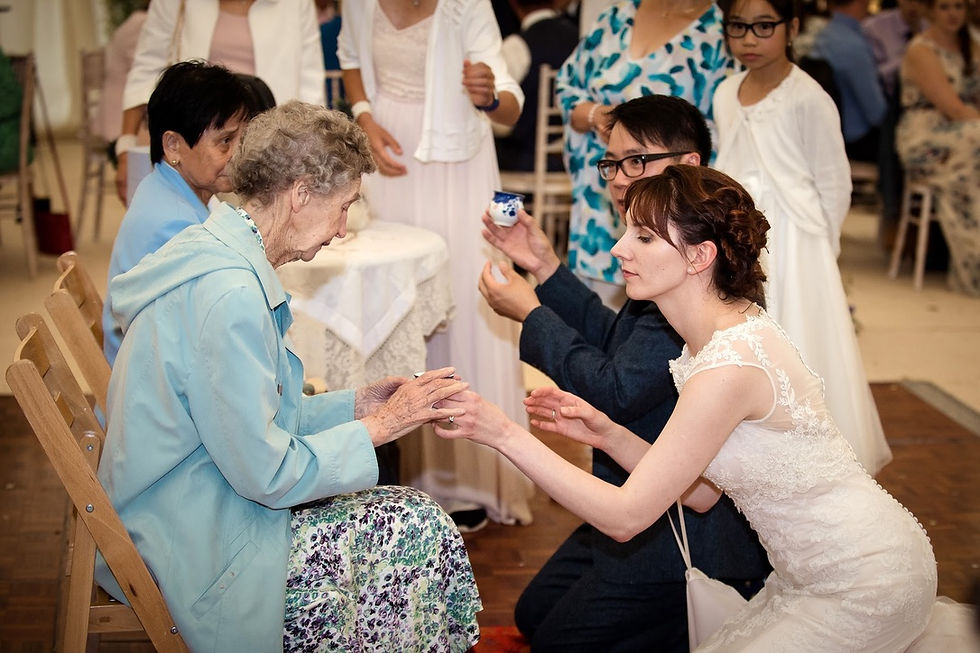
Bride and groom being showered with confetti after their ceremony on the family farm Bride and Groom smiling at their guests after their outdoor wedding celebration ceremony Couple jumping the broom after their celebration ceremony at the local community hall Couple incorporating a traditional Chinese tea ceremony into their wedding at a marque at home
All led by a wedding officiant who has taken the time to truly understand your story.
For many couples, weddings are about far more than signing a legal document. They’re about celebrating love, family, culture and identity — and those moments deserve a ceremony that reflects exactly who you are.
Independent Celebrants specialise in creating bespoke, personal ceremonies and unlike standardised legal ceremonies, they can include:
cultural and religious traditions
symbolic rituals
contributions from family and friends
personalised vows
meaningful storytelling about your relationship
Every ceremony is unique because every couple is unique.
In other countries around the world, celebrants are already legally authorised to conduct marriages (including Australia, New Zealand and America). Scotland and Northern Ireland both allow Humanist Celebrants to conduct legal ceremonies. The hope is that England and Wales will soon follow their lead, but go further, by allowing Independent Celebrants to conduct legal marriages too; giving couples greater flexibility and choice.
The Give Couples Choice Campaign
A wonderful campaign called the Give Couples Choice Movement is working to raise awareness of this issue and encourage the government to modernise marriage law.
Their goal is simple: to give couples more freedom over their wedding ceremony — including the option for trained, professional Independent Celebrants to conduct legal marriages.
If you believe couples should have more choice in how they celebrate their love, you can learn more about the proposed changes and how to support the campaign by visiting their website.

A Future Full of Possibility!
Weddings today are wonderfully diverse. Couples are choosing intimate ceremonies, outdoor celebrations, multicultural weddings and deeply personal rituals that reflect their values and beliefs. Updating marriage law would simply bring the legal framework in line with how people actually celebrate their relationships today. For couples, it would mean more freedom, more creativity and more meaningful ceremonies. And for Independent Celebrants like me, it would mean being able to guide couples through the entire process — creating a ceremony that is not only heartfelt and personal, but legally recognised too.
For now, we watch this space with hope, because every couple deserves the freedom to say “I do” in a way that truly reflects them.



Comments